
Many products that are indispensable for everyday life contain chemicals that can pose a danger to human health. Permanent chemicals and polyfluoroalkyl substances (PFAS) are used in many products such as non-stick pans, cosmetics, stain-resistant fabrics, fire-fighting foams, food packaging and waterproof clothing. However, the use of these chemicals carries various risks. These substances, which can remain in nature for thousands of years, are thought to be associated with reduced fertility in adults, developmental delay in children and increased risk of certain types of cancer.
Experts have long been looking for ways to get rid of these chemicals, or at least convert them into harmless organic compounds. Now, a study published in the journal Environmental Science and Technology shows promise in minimizing the potential harm of PFASs. The study, published in the journal Environmental Science and Technology, shows that heating PFASs with granular activated carbon (GAC) can break down these chemicals.
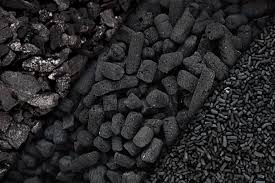
GAC, which is frequently used in filtration, consists of granules obtained by heating carbon-rich materials. In addition to its widespread use, it also stands out with its ease of supply. According to the latest data, when PFAS is heated with GAC at an average of 300°C, it mineralizes ninety percent and turns into harmless inorganic fluorine. While existing methods require temperatures exceeding 700°C, high pressure or solvents for this process, GAC eliminates these requirements. “There is no need for very high temperatures or organic solvents. You only need to heat the PFAS with granular activated carbon (GAC).” Feng Xiao, one of the authors of the study and Feng Xiao from the University of Missouri, once again emphasizes the advantages of using GAC.
According to Dr. Xiao, the low cost and long lifetime of GAC makes the new method more economical, environmentally friendly and accessible. “When GAC is involved, the thermal degradation of PFAS is much faster and the mineralization is more intense. Compared to methods such as reverse osmosis, it is not expensive and can be done on a local scale in an ordinary furnace.”
This study on PFAS pollution could be one of the important building blocks for a sustainable future. “In the Midwest, we use a lot of herbicides and give a lot of medicines to animals. These can contain high amounts of PFAS,” says Dr. Xiao. “With this new method, we can drastically reduce the amount of these substances in our lives.”